Influenster: Member App Redesign
01. Project introduction
When launching new products, retailers often struggle to generate authentic, high-quality user-generated content (UGC) at scale. Reviews are a critical driver of purchase decisions, yet early-stage products typically lack the volume and credibility needed to influence potential buyers.
To address this, Bazaarvoice leverages its Content Acquisition Services (CAS) portfolio to help brands seed products with highly targeted consumers. Through its sister platform Influenster, which has a community of over 7.5 million members, products are distributed to individuals who match specific audience criteria such as location, age, interests, or demographics.
These members receive products and share their experiences by submitting reviews through the Influenster app, generating authentic content that can then be syndicated across the Bazaarvoice network. This approach not only accelerates the creation of trusted UGC but also helps brands build early momentum, increase product visibility, and ultimately influence purchasing behaviour at scale.
02. The Problem
While the programme successfully distributed products to targeted members, engagement after delivery was inconsistent. Members were given a 30-day window to submit reviews, yet overall completion rates remained low, with an even greater drop in reviews that included photos or other rich media.
This gap was particularly significant, as media-rich content and social sharing, such as Instagram posts or Facebook uploads, were key expectations for clients and played an important role in increasing the authenticity and impact of reviews. However, these higher-effort actions required more motivation than simply submitting written feedback and were not consistently completed by members.
As a result, retailers were not receiving the volume or quality of user-generated content needed to maximise campaign performance. This highlighted a clear opportunity to better support and motivate members throughout the review process.
How might we increase the rate of completed reviews, particularly those including high-quality media and social sharing, by better motivating and supporting members within the 30-day review window, in order to deliver more valuable and impactful user-generated content for retailers?
03. Discovery and Research
User interviews
To better understand both sides of the experience, I conducted qualitative interviews with a mix of highly engaged and less engaged members, alongside retailer clients. This included 5 of our most active members, 5 less engaged members, and 4 retailers who had recently run campaigns through the platform.
The aim was to uncover what motivates members to complete reviews, what barriers prevent them from doing so, and how retailers define success when evaluating campaign outcomes.
Approach
Interviews were semi-structured, allowing for consistent themes to be explored while giving participants the flexibility to share their experiences in depth. Discussions focused on:
- The end-to-end review experience
- Motivations and incentives for participation
- Barriers to completing reviews and uploading media
- Perceptions of social media requirements
- Expectations of content quality and usefulness
Key Findings
- Motivation is driven by ease and clarity
Highly engaged members valued simple, guided experiences and were more likely to complete reviews when expectations were clear and easy to fulfil. - Effort is a key barrier
Less engaged members cited time, effort, and uncertainty as reasons for not completing reviews, particularly when tasks involved additional steps such as uploading photos or posting on social media. - Social media is not a strong motivator
Many members felt reluctant to post on their personal social channels, often due to privacy concerns or lack of confidence, and did not see it as a natural extension of writing a review. - Retailers prioritise quality over channel
Retailers consistently emphasised the importance of authentic, high-quality reviews with useful detail and imagery, rather than where the content was shared.
Insight
These interviews highlighted a clear opportunity to reduce friction within the review process and better align the experience with member motivations, while focusing on delivering the type of content retailers actually value.
Journey Mapping
This journey maps the experience of a member from receiving a product to completing (or not completing) a review.
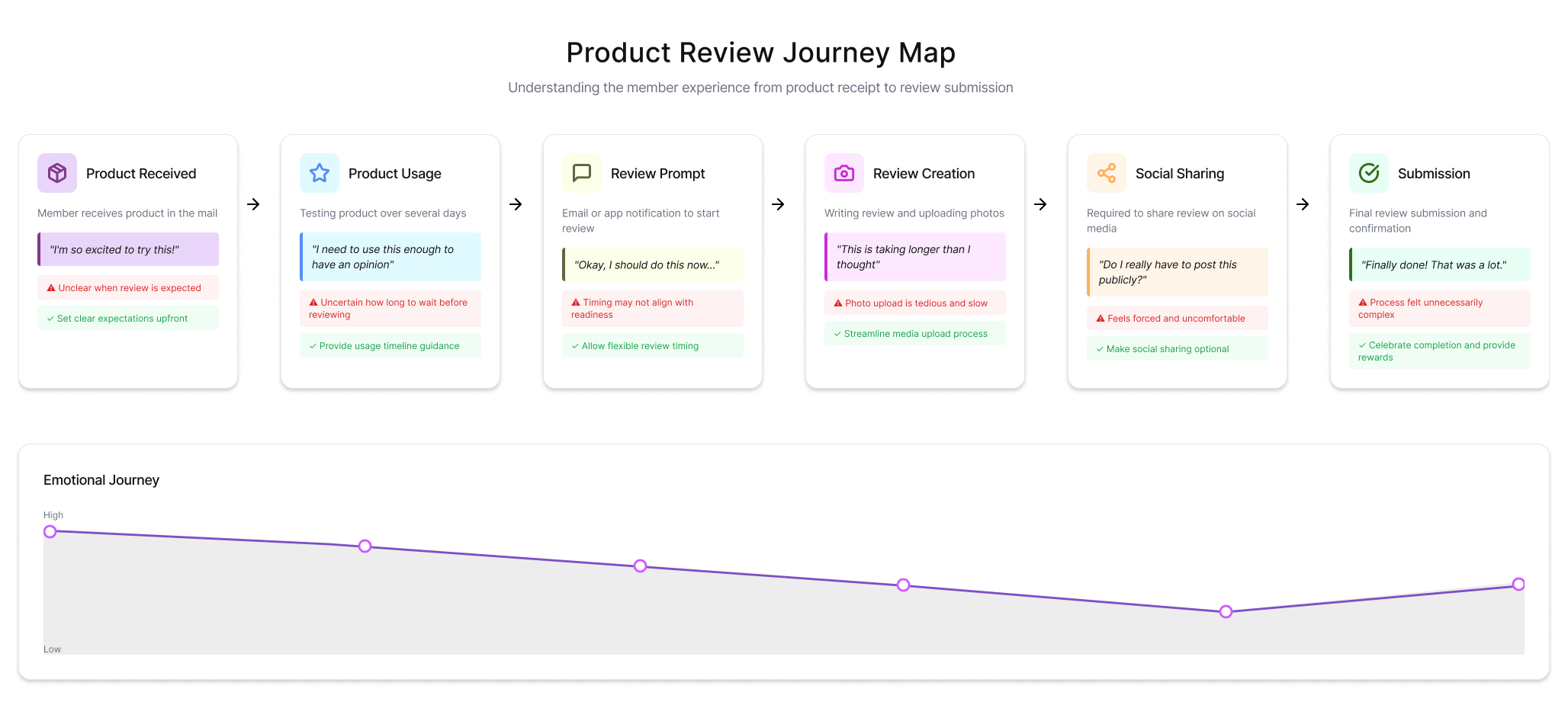
Journey map for users going through the member app flow.
Data Driven Design
To better understand where members were dropping off in the review journey, I analysed behavioural data using Pendo, tracking engagement across each stage of the experience. This revealed a clear pattern of declining participation as the level of effort increased.
The funnel showed that while all members successfully received their product, only around 65% went on to start a review. This dropped further to 40% who completed and submitted a review. Engagement declined more sharply for higher-effort tasks, with only 15% of members uploading media and just 5% completing the social media step.
This data highlighted a critical issue: each additional requirement introduced friction, with the most significant drop-off occurring at the point where members were asked to share content on social platforms.
Misalignment Between User Needs and Business Assumptions
User research revealed a fundamental misalignment between retailer expectations and how the platform was encouraging members to create content. While retailers consistently expressed a desire for high-quality, authentic user-generated content, their primary focus was on reviews, not social media posts.
The inclusion of social media sharing within the member experience had been based on the assumption that retailers valued this type of content as part of their campaigns. However, in practice, social media is typically managed by separate internal teams, and is not considered a core outcome of these product seeding initiatives. As a result, social posting was not seen as essential to campaign success from a retailer perspective.
Challenges with Social Media Content
Further research highlighted several practical and strategic issues with relying on social media as a content channel:
- Content reliability
Social posts can be deleted at any time. This creates challenges for reporting, as content may no longer be available when campaign results are compiled, leading to lower reported completion rates and reduced value for clients. - Legal and rights management complexity
Managing usage rights for social content introduces additional complexity, particularly when dealing with private accounts, deleted posts, or missing permissions. - Platform dependency
Changes to social platform APIs can directly impact functionality. For example, restrictions to Meta APIs have previously prevented users from posting to Instagram, reducing feature reliability. - High effort for members
Posting on social media requires significantly more effort than submitting a review. This is reflected in lower completion rates and a higher volume of support queries related to social tasks. - Exclusion of non-social users
Not all members are active on social media, often due to privacy concerns. Requiring social participation risks disengaging a portion of the community who would otherwise be willing to contribute.
Opportunity
This insight reframed the problem: rather than encouraging members to create content for external platforms, there is a stronger opportunity to focus on review-based content within the app, where both engagement and completion rates are higher.
Importantly, images and media can still play a key role within reviews. Unlike social posts, which are typically geared towards aspirational content, in-app media can support a broader range of use cases:
- Inspirational — showcasing lifestyle or aesthetic use
- Functional — demonstrating how a product works
- Educational — helping others understand features or benefits
04. Conceptualisation
The current review experience follows a structured, multi-step flow, guiding members from product selection through rating, written feedback, media upload, and additional questions. While this approach captures detailed and valuable data for retailers, it creates a linear, task-heavy journey.
Users begin in the "My Products" section and move through each step sequentially. Although some steps are optional, the design presents them with equal weight, making the process feel longer and more demanding than necessary.
Observed Challenges
- Perceived effort is high
The number of steps and inputs can make the process feel lengthy, particularly for less engaged members. - Lack of prioritisation
Core actions (writing a review) and higher-effort tasks (media upload, video, additional questions) are presented with similar weight, making it unclear what is essential. - Linear progression increases drop-off risk
The step-by-step structure can lead to abandonment, especially when users encounter more demanding tasks later in the flow. - Optional steps feel like requirements
Although users can skip, the design implies expectation, particularly around media and additional inputs.
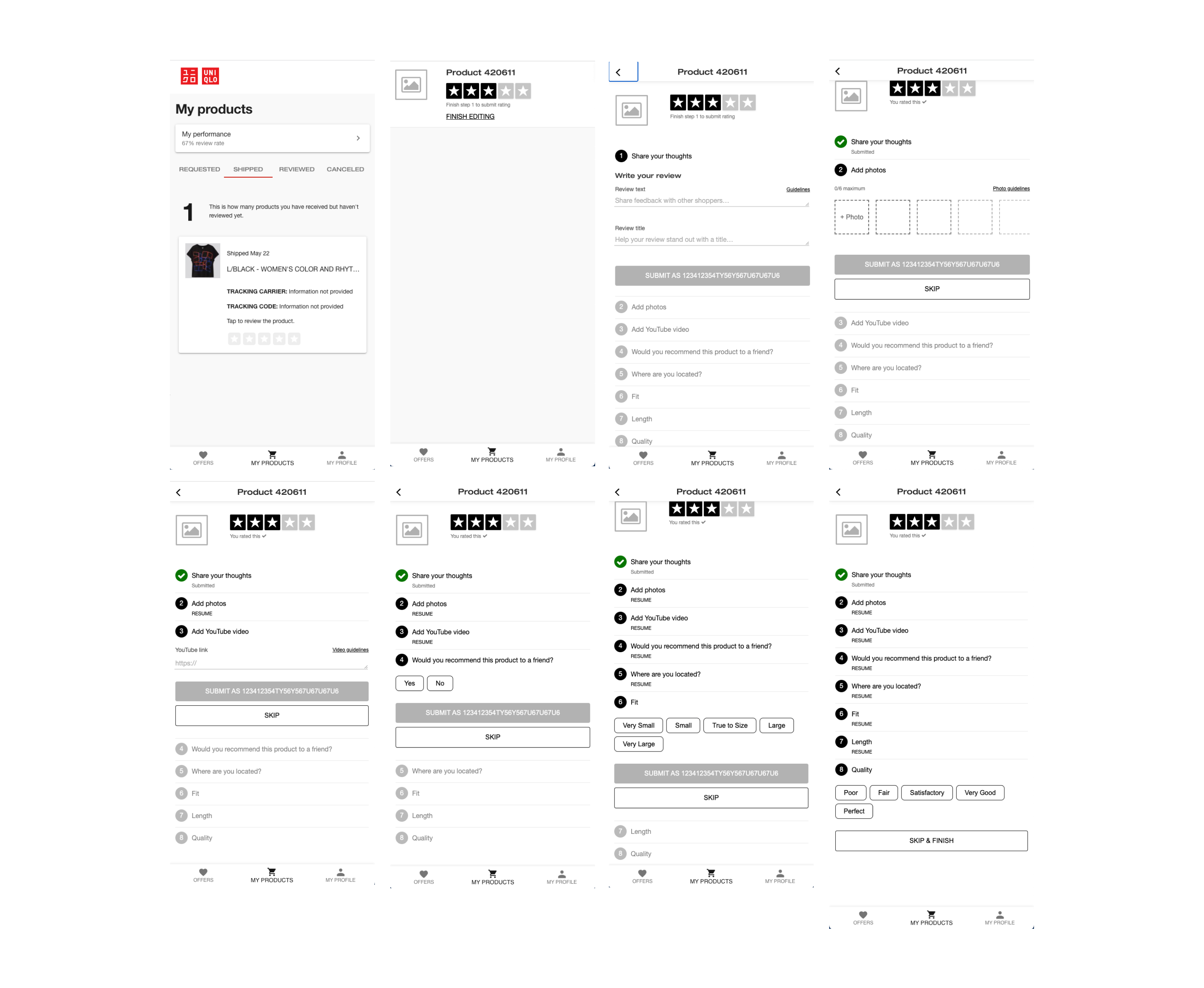
The former experience was outdated and not user-friendly.
05. Solution
To improve review completion and encourage richer content, the experience was redesigned to reduce perceived effort and better guide members through the process. The focus shifted from collecting as much information as possible to prioritising core actions and supporting users to go further where possible.
The updated UI introduces a more flexible, step-based flow that clearly distinguishes between essential and optional tasks. Writing a review is positioned as the primary action, while media upload and additional inputs are framed as enhancements rather than requirements. This reduces pressure on members while still encouraging higher-quality contributions.
Key Features:
- Clear task prioritisation
Core actions such as rating and written feedback are surfaced first, helping users quickly complete the most important step. - Progressive disclosure
Additional tasks like photo and video uploads are revealed after the review is complete, reducing initial overwhelm. - Encouragement over enforcement
Media upload is repositioned as a value-add, supported by prompts and guidance rather than implied obligation. - Flexible flow with skip options
Users can move through the experience at their own pace, lowering drop-off and maintaining engagement. - Guided inputs
Prompts and structured fields help users write reviews more easily and confidently.
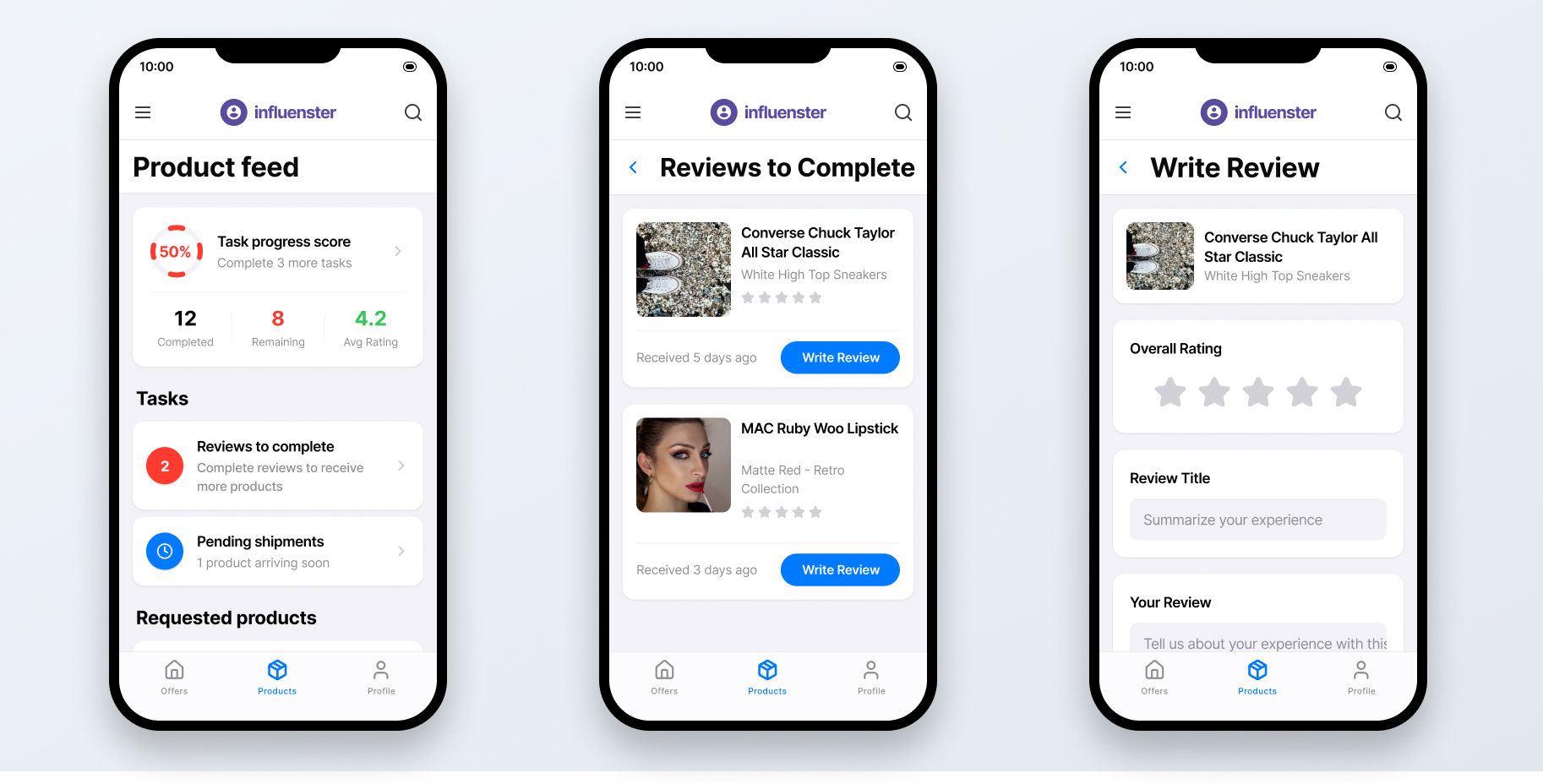
The new app experience is easier to use and has a cleaner aesthetic.
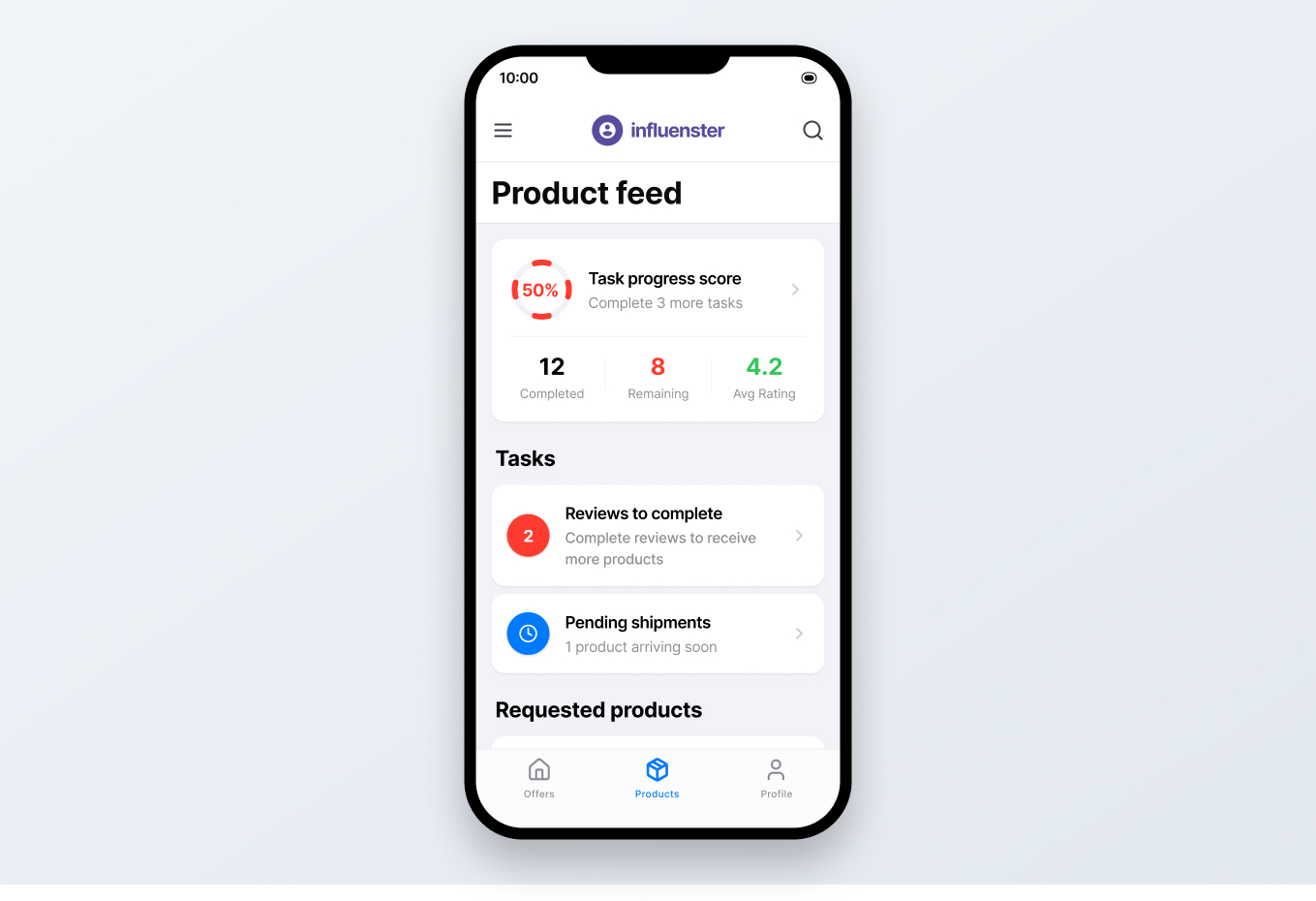
Overview screen showing task progress, pending reviews, and shipments, helping members quickly understand what needs to be completed.
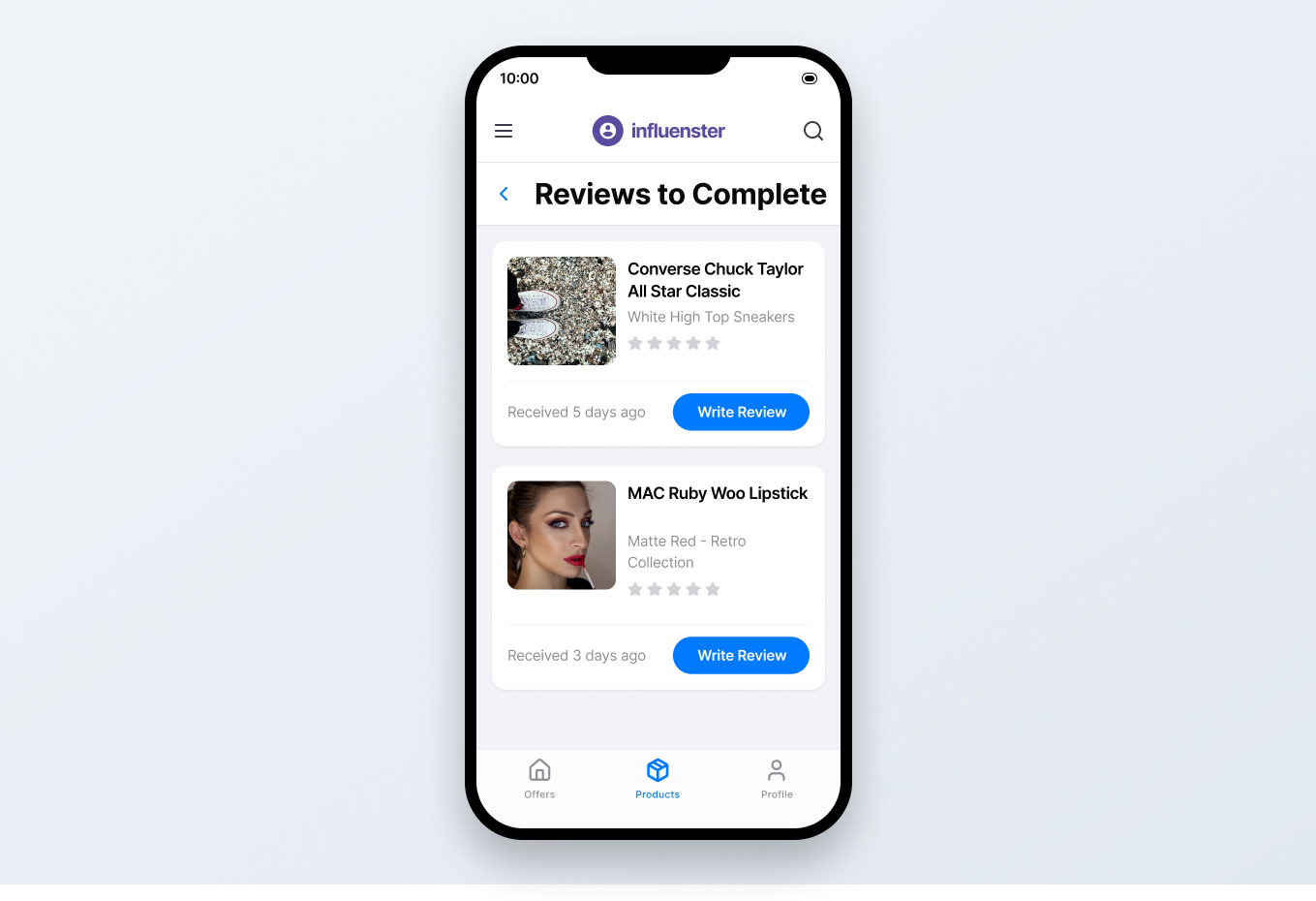
A focused list of products awaiting review, with clear call-to-action buttons to start writing and reduce friction in getting started.
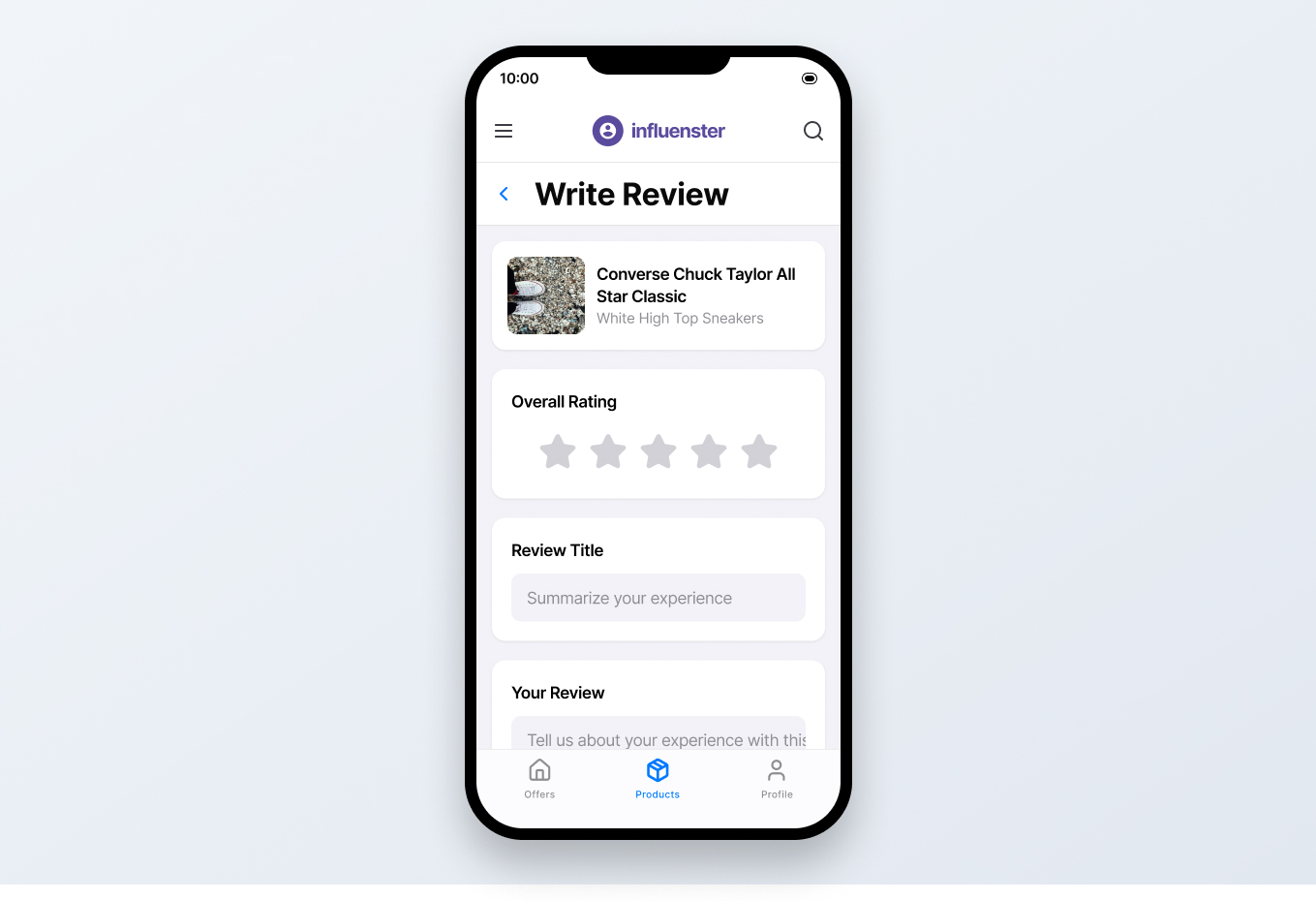
Simplified review entry screen prioritising core inputs like rating, title, and written feedback to make completing a review quick and easy.
06. Reflection
This project reinforced the importance of questioning assumptions and grounding decisions in both user behaviour and business needs. Initially, social media content was treated as a key output, but research revealed a clear misalignment between what retailers valued and what members were willing to do. Refocusing on review quality rather than distribution channel allowed for a more meaningful and achievable experience.
I also learned that reducing perceived effort can have a greater impact than adding new features. By simplifying the flow, prioritising core actions, and reframing higher-effort tasks as optional enhancements, the design better supported user motivation while still meeting business goals.